

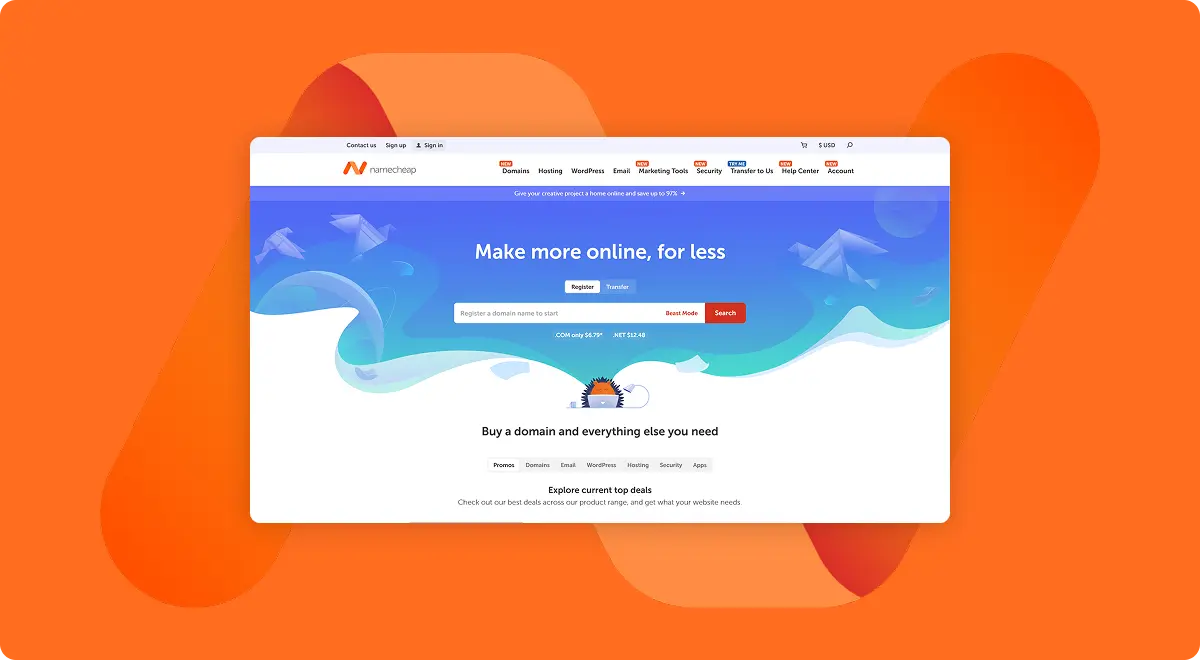
Namecheap has been the quiet giant of the domain world since 2000. Over 10 million domains, 2 million customers, a 4.7 out of 5 rating across Shopper Approved. But here's the question nobody actually answers cleanly: in 2026, is Namecheap still the obvious choice, or has "cheap" become a stretch? The brand has quietly moved into hosting, managed WordPress, email, SSL, and AI tools, and some of those products are genuinely good while others aren't.
This review walks through what Namecheap actually does well in 2026, what they don't, and whether any of their products deserve your money.
Visit NamecheapWhat is Namecheap and what do they actually do?
Namecheap started life in Phoenix, Arizona in 2000 as a simple domain registrar trying to undercut GoDaddy on price. That mission worked. Today Namecheap manages over 10 million domain names and serves more than 2 million customers globally. The name still carries weight in the domain world.
Over the years the company expanded well beyond domains. The current lineup covers shared hosting, managed WordPress (EasyWP), VPS, dedicated servers, reseller hosting, Private Email, SSL certificates, a VPN, and a website builder. Some of these products are genuinely competitive. Others exist mostly to cross-sell domain customers.
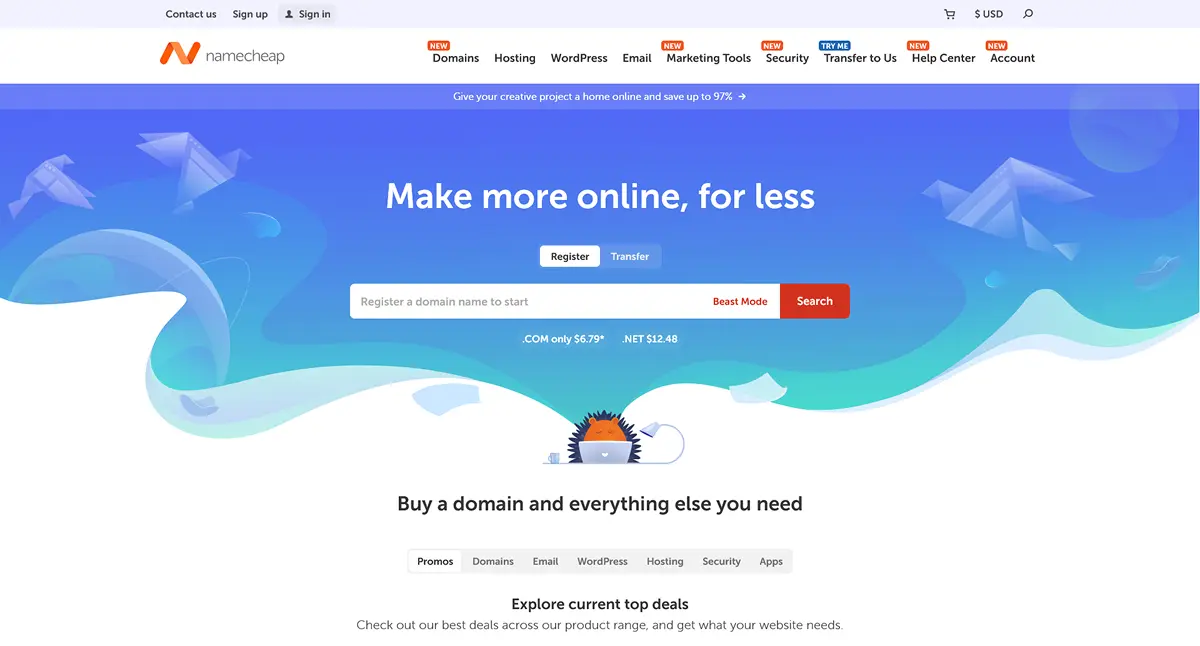
The two products most people care about are domain registration (where Namecheap still ranks among the cheapest) and hosting (where the story is more complicated). Shared hosting uses cPanel on Apache servers, which is standard but not the fastest option available. EasyWP is the managed WordPress product built on Namecheap's own cloud, which is a genuinely different experience from typical shared hosting.
One thing to know upfront: Namecheap also owns Spaceship, a newer platform with cheaper domain prices and a more modern interface. If you're registering domains purely for the lowest price, Spaceship might actually beat Namecheap on its own pricing game in 2026.
Who is Namecheap built for?
Namecheap works best for beginners, small business owners, and anyone registering multiple domains. The interface is clean, the pricing is transparent, and the support team is available around the clock. If you're launching your first website, registering a portfolio of domain names, or running a personal blog, Namecheap covers everything from domain to hosting to email in one account.
Freelancers and solopreneurs get real value from the bundled ecosystem. Register a domain, grab an SSL, add Private Email, host a WordPress site, all from one dashboard. EasyWP is particularly good for non-technical users who want WordPress without the learning curve.
On the other hand, Namecheap is probably not right for high-traffic sites or performance-focused developers. The Apache-based shared hosting is slower under load than LiteSpeed alternatives, EasyWP has a hard resource ceiling that throttles above roughly 10,000 monthly visitors, and shared hosting only has data centers in the US, UK, and EU.
If you're running an ecommerce store, a high-traffic blog, or anything that depends on fast page loads, look at faster hosts like Hostinger or Hosting.com. Namecheap's sweet spot is the budget end: small sites, simple needs, and domain-heavy workflows.
The features that actually matter
Namecheap's feature list is long. Here are the ones that actually affect your day-to-day experience.
Cheap domains with free WhoisGuard
This is still Namecheap's strongest product. .com domains start at $5.98/year on promotion (renews $10.98). .net runs $12.48/year, .org $7.48/year, .info $3.98/year, .dev $6.98/year. Every registration includes free WhoisGuard privacy protection for life, which most competitors charge $10+/year for. DNS management is clean, transfers are easy, and the domain marketplace lets you buy and sell domains directly through the platform.
Shared hosting with cPanel and free SSL
The Stellar line of shared hosting runs on cPanel with Apache, not LiteSpeed. You get NVMe SSD storage, unmetered bandwidth, free Namecheap Supersonic CDN, and a free Sectigo PositiveSSL certificate (a paid cert, not just Let's Encrypt). The honest trade-off is performance: Apache handles concurrent traffic slower than LiteSpeed, so busy sites will feel it.
EasyWP managed WordPress
Launched in 2019, EasyWP is Namecheap's answer to WP Engine and Kinsta at a fraction of the price. One-click WordPress install, automatic updates, free Cloudflare CDN, built-in backups, and a dashboard designed for people who've never seen cPanel. The 30-day free trial is rare in managed WordPress. most competitors make you pay upfront. Plans start at $2/month on annual billing. We'll break this down more in its own section below.
Private Email and SSL certificates
Namecheap's Private Email starts at $14.88/year with 5GB storage, significantly cheaper than Google Workspace. Reliability is solid and spam filtering works well. For SSL certificates, PositiveSSL starts at $5.99/year, EV SSL at $45.99/year, and wildcards at $39.99/year. Legitimately cheap for paid certs, though Let's Encrypt remains free for most use cases.
Supersonic CDN and security
Namecheap's Supersonic CDN is free with Stellar Business plans (and all Stellar plans on EU and Singapore data centers). It's built on Cloudflare under the hood. Security includes ModSecurity firewall, basic DDoS protection, and Imunify360 on Business plans.
Want to see the full feature set yourself? Namecheap offers a 30-day money-back guarantee on shared hosting, a 30-day free trial on EasyWP, and a 2-month free trial on Private Email.
Try NamecheapNamecheap pricing in 2026: what you'll actually pay
Namecheap has multiple product lines with different pricing logic. The pattern is the same across all of them: cheap intro rates, significantly higher renewal. Here's what things actually cost in 2026.
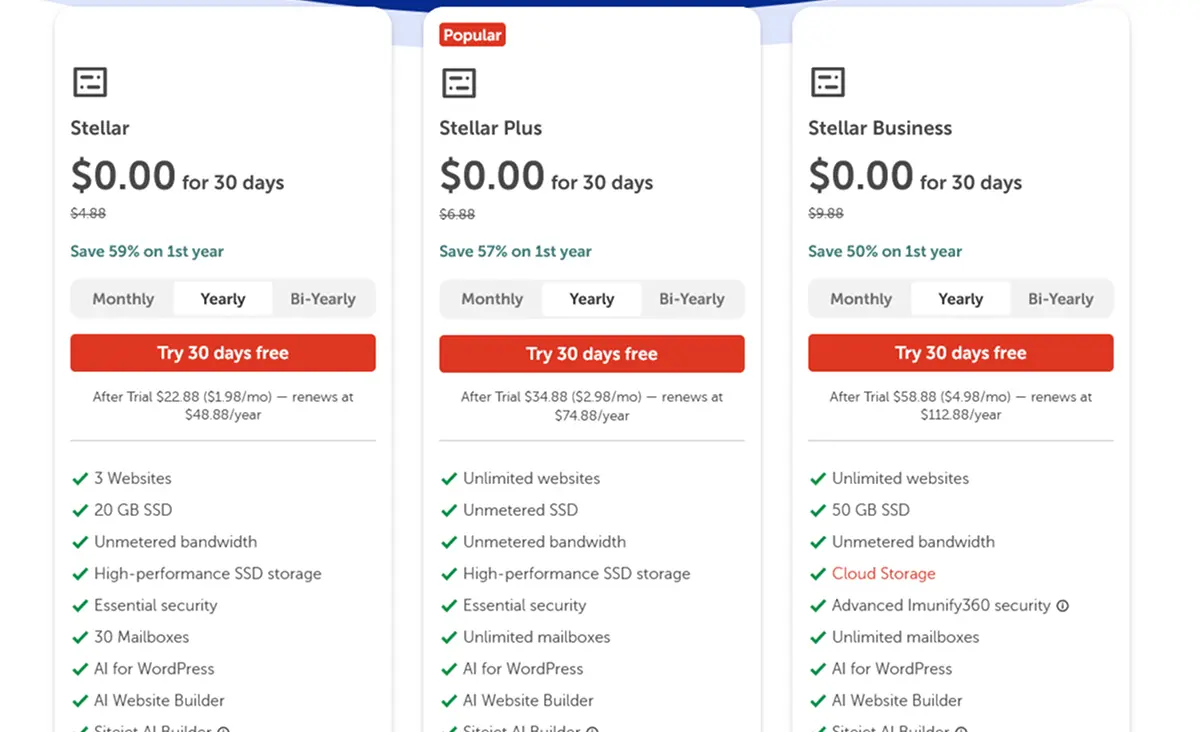
The Stellar shared hosting plan starts at $1.98/month on annual billing for the US data center (UK and EU are a dollar extra), with a 30-day free trial. You get 3 websites, 20GB SSD, unmetered bandwidth, free domain, 30 email accounts, and twice-weekly backups. Renewal is $4.48/month, which more than doubles the intro price.
The Stellar Plus plan at $2.98/month is the most popular tier. Unlimited websites, unmetered SSD storage, and AutoBackup. Renewal jumps to $6.88/month. The Stellar Business plan at $4.98/month includes cloud storage, Imunify360 security, and 50GB SSD (renews $10.88/month). All three tiers include a free domain, free SSL, AI for WordPress, and the Sitejet AI Builder.
The EasyWP plans are priced differently. Starter is free for the first month, then $9.88/month monthly (or cheaper annually). Turbo is $2/month on annual with 50GB storage for 200,000 visits (renews $18.88/month). Supersonic is $3/month on annual with 100GB for 500,000 visits (renews $26.88/month). All EasyWP plans include free Cloudflare CDN, free SSL, automatic backups, and the 30-day free trial.
VPS hosting uses Spark/Pulsar/Quasar/Magnetar/Hypernova naming, starting at $3.88/month for 1 CPU and 1GB RAM up to $46.88/month for 12 CPU and 24GB RAM. Dedicated servers start at $37.74/month.
One thing to watch: renewal pricing on shared hosting runs 100 to 130% above intro rates. That's steeper than Hostinger. Smart buyers either commit to 2 or 3 years upfront (locking the low rate longer) or plan to migrate at the end of year one. The 30-day money-back guarantee is your safety net.
"Best internet support I have had since 1993 when internet first went public. The support staff are knowledgeable, thorough, pleasant and treat clients with respect and understanding."
— ICU Media, Trustpilot reviewEasyWP: Namecheap's managed WordPress story
EasyWP deserves its own section because it's Namecheap's most interesting hosting product. It's a fully managed WordPress platform that runs on Namecheap's own cloud infrastructure rather than traditional shared hosting. The marketing calls it "serverless WordPress," though that's really just shorthand for "you don't manage the server."
The standout feature is the dashboard. One-click WordPress install, one-click SSL, one-click backups, and one-click staging (on Turbo and Supersonic plans). There's no cPanel, no database configuration, no server-level settings to poke at. For a WordPress beginner, this is genuinely refreshing. Setup takes about 90 seconds from signup to a live site.
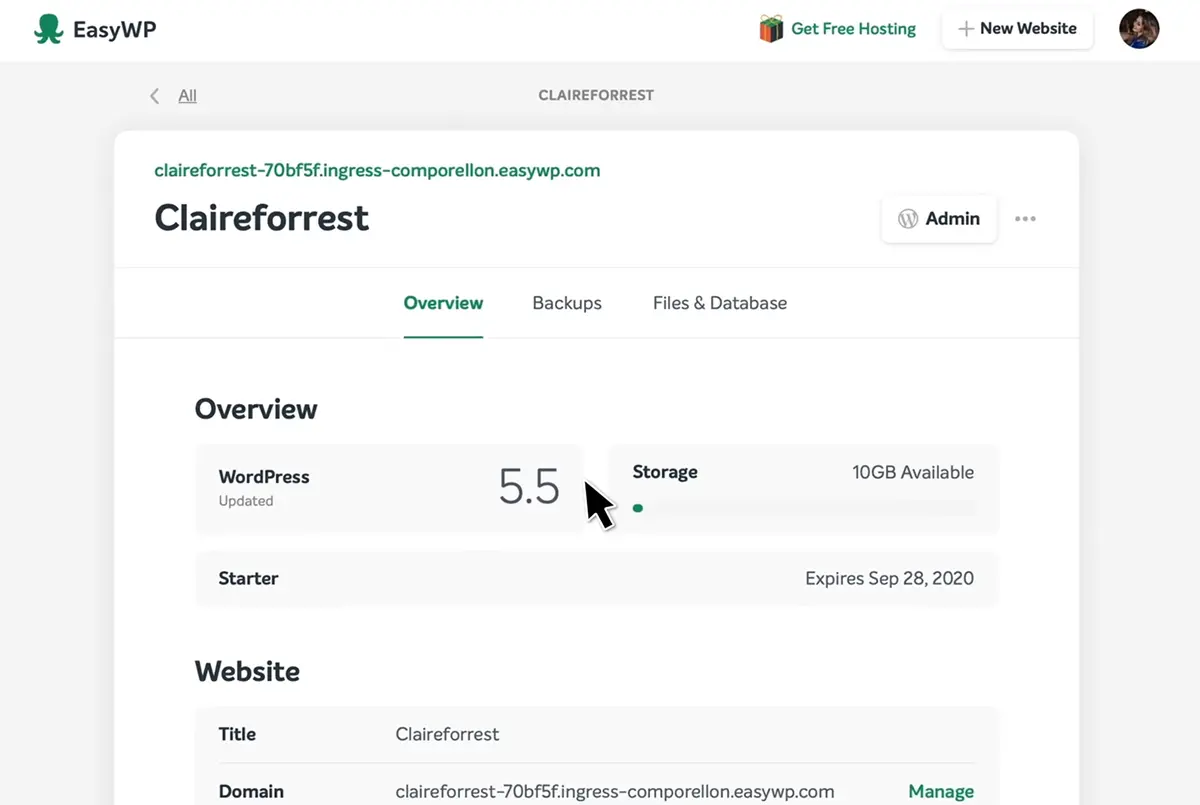
The honest trade-off is the resource ceiling. Independent benchmarks show EasyWP allocates roughly 1 vCPU and 1GB RAM per site even on Turbo. Fine for a blog under 10,000 monthly visitors. For a WooCommerce store or complex plugins at 50+ concurrent users, you'll hit throttling. TTFB can spike to 500ms+ under load. If traffic is moderate, EasyWP is a steal at $2 to $3/month.
The 30-day free trial is the best way to evaluate fit. Install WordPress, migrate your content, run it against real visitors before paying anything. If it holds up, stay. If not, move to Hosting.com's Rocket.net-powered WordPress or Kinsta without losing a dime.
What real users are saying in 2026
We went through recent reviews on Trustpilot, G2, HostAdvice, and Reddit to see what current Namecheap customers actually think.
The platform holds 4.7 out of 5 across Shopper Approved (2M+ reviews), which is genuinely strong for a hosting and domain company. The most consistent praise goes to domain registration pricing, the 24/7 live chat support, and the clean dashboard. Customers repeatedly mention that Namecheap's support is responsive and the team actually resolves issues rather than reading from scripts.
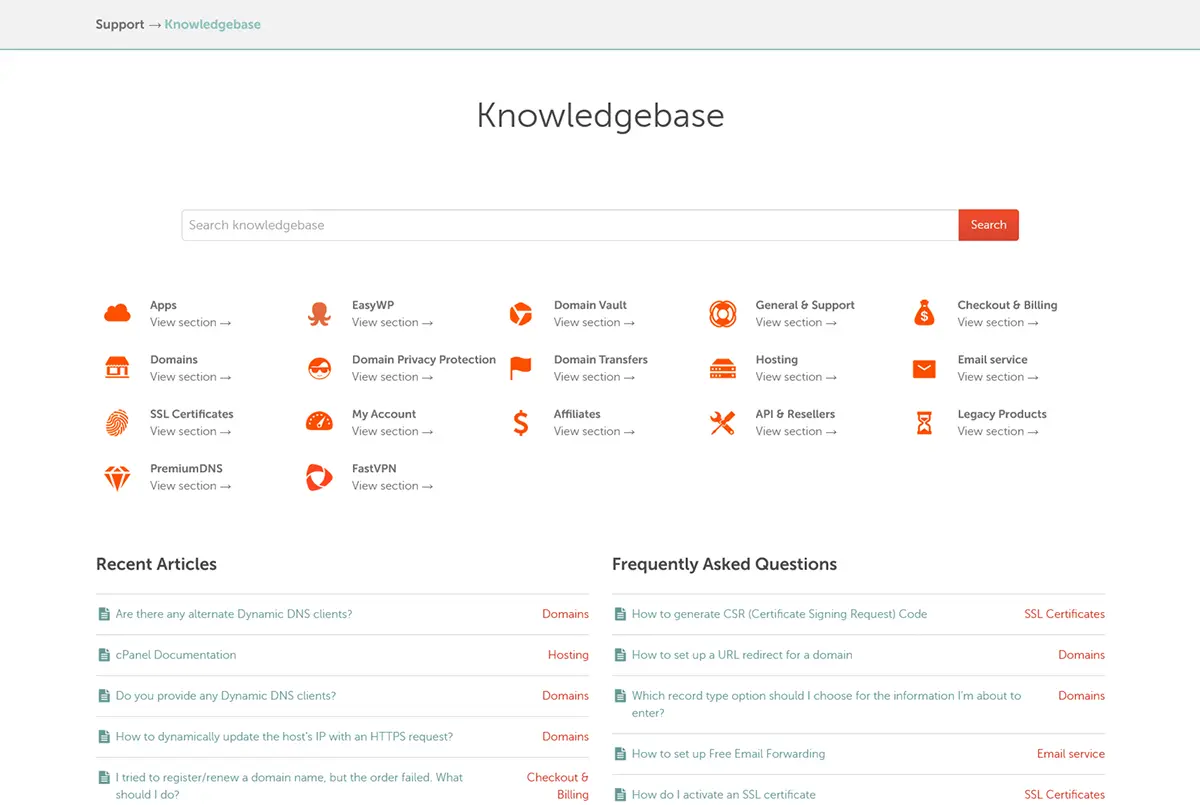
The common complaints are predictable. Renewal pricing comes up in nearly every critical review, with customers surprised by the 2x to 3x jump after the first term. A handful of HostAdvice complaints cite account access issues and aggressive upsell tactics, though these are outliers. Some users have also reported that EasyWP's "unlimited bandwidth" claim comes with practical resource limits that aren't clearly disclosed upfront.
One Trustpilot reviewer praised the support as "knowledgeable, thorough, and pleasant." Another called Namecheap a reliable option for "growing businesses that need affordable hosting without sacrificing reliability." These line up with what independent tests show: for the price point, Namecheap delivers on its core promises.
Honest pros and cons breakdown
Here's our straight take after reviewing pricing, infrastructure, user feedback, and recent testing.
What we like
What could be better
Who should use Namecheap (and who shouldn't)
Namecheap is a strong choice if you're buying domains on a budget, launching your first WordPress site with EasyWP, running a small business site that doesn't need elite performance, or consolidating domain plus hosting plus email into one account. The 30-day free trial on EasyWP and the 30-day money-back on hosting make it essentially risk-free to try.
Skip Namecheap if you're running a high-traffic WordPress site, you need LiteSpeed-tier performance, your audience is primarily in Asia or Australia, or you're optimizing for 3-year total cost of ownership. For those use cases, Hostinger or Hosting.com's managed WordPress delivers meaningfully better performance at a closer long-term cost.
How Namecheap stacks up against the competition
Namecheap competes in a crowded budget-to-mid hosting space. Here's how it compares against the hosts most people are also considering.
Namecheap vs Hostinger. Hostinger wins on raw hosting performance (LiteSpeed, global data centers) and lower renewal rates. Namecheap wins on domain pricing and the 30-day free trial on EasyWP. If you need a domain plus basic hosting in one place, Namecheap is more convenient. If hosting speed is your priority, Hostinger is better.
Namecheap vs Bluehost. Bluehost has better WordPress.org integration but higher prices. Namecheap's Stellar Plus at $2.98/month beats Bluehost on features and cost. For beginners on tight budgets, Namecheap wins.
Namecheap vs GoDaddy. Namecheap is cheaper across nearly every product, has better support, and pushes fewer aggressive upsells at checkout. For most small business use cases, Namecheap is the honest value pick.
How to get started without the headaches
Signing up for Namecheap is straightforward, but there are a few things worth knowing upfront.
Start by picking the right product first. For just a domain, use the domain search. For WordPress, skip Stellar shared and go straight to EasyWP (the 30-day free trial makes this risk-free). For a small non-WordPress site or email accounts on a custom domain, Stellar Plus at $2.98/month is the right entry point.
Next, pick your data center at checkout. US is the default and cheapest. UK and EU are a dollar extra but better for European audiences. There's no way to change locations later without migrating, so pick based on your primary audience.
At checkout, commit to the longest term you're comfortable with. The intro price only applies for the first term, so a 3-year commitment locks in more value than 1-year. The 30-day money-back guarantee gives you a safety net.
After signup, your account is live within seconds. Shared hosting comes with cPanel and Softaculous one-click installers. EasyWP installs WordPress automatically and you're in the dashboard in under 2 minutes. Free migration support is available if you're moving from another host.
"Namecheap has been a trusted partner for our critical domain names. As we continue to grow, we know we can always count on them."
— Dylan Field, Co-founder and CEO, FigmaFrequently asked questions
Namecheap is good for beginners and small sites that don't need heavy performance. Shared hosting starts at $1.98/month with a free domain, free SSL, and cPanel. The main trade-off is that Namecheap uses Apache rather than LiteSpeed, which means shared hosting performs a bit slower than competitors like Hostinger or Hosting.com under heavy load. For a personal blog or small business site, it works fine. For a high-traffic WordPress site or WooCommerce store, consider EasyWP or a faster host.
Shared hosting starts at $1.98/month for the Stellar plan on annual billing (renews at $4.48/month). Stellar Plus is $2.98/month, and Stellar Business is $4.98/month. EasyWP managed WordPress is free for 30 days, then $2 to $3 per month on annual plans. VPS starts at $3.88/month for Spark. Domain prices start at $5.98/year for .com on promotion. All paid plans include a 30-day money-back guarantee.
EasyWP is genuinely good for beginners and small WordPress sites under 10,000 monthly visitors. The one-click setup, clean dashboard, free Cloudflare CDN, and 30-day free trial make it one of the easiest managed WordPress products available. The limitation is the resource ceiling of roughly 1 vCPU per site, which means it can throttle under heavy traffic. If you need staging environments, cPanel, or high concurrency, you'll want Hosting.com's Rocket.net-powered WordPress or Kinsta instead.
Namecheap's intro prices are still among the lowest in the industry, but renewal prices have crept up significantly. Stellar renews at $4.48/month after the first term, Stellar Plus at $6.88/month, and EasyWP Turbo jumps from $2 to $18.88/month. Ironically, Namecheap's own platform Spaceship now offers cheaper domain prices. For year-one pricing, Namecheap still wins on budget. For 3-year total cost of ownership, alternatives like Hostinger can come out cheaper.
Yes, on multiple products. Shared, VPS, and dedicated hosting plans come with a 30-day money-back guarantee. EasyWP managed WordPress comes with a 30-day free trial instead of a money-back period, and Private Email has a 2-month free trial. Domain registrations are typically non-refundable, which is standard across the industry. The refund policies are clear and applied fairly in most recent user reports.
Namecheap is worth it for two specific use cases: registering domains cheaply and running small WordPress sites through EasyWP. For domains, free WhoisGuard privacy, clean DNS management, and honest pricing still make Namecheap one of the top choices. For hosting, EasyWP is genuinely user-friendly for small blogs and business sites. If you need high-performance hosting, enterprise features, or the lowest possible renewal rates, look at alternatives like Hostinger or Hosting.com.
Final verdict: is Namecheap worth it in 2026?
Yes, Namecheap is worth it for the right use cases. Not as a one-size-fits-all answer, but as a focused choice for domain registration and beginner-friendly WordPress hosting.
The platform's biggest strengths are domain pricing (still competitive after 25 years), EasyWP (a genuinely good managed WordPress product for small sites), and the 30-day risk-free trials
The biggest weaknesses are real. Apache on shared hosting means slower performance under concurrent load. EasyWP's resource ceiling caps traffic at roughly 10,000 monthly visitors before throttling. Renewal pricing jumps 100%+ after the first term. And Namecheap's own Spaceship platform is now cheaper for domains.
If you've been considering it, the 30-day free trial on EasyWP is the easiest way to evaluate fit. Sign up, migrate a WordPress site, watch the analytics for a month. If performance holds up, stay. If not, move on without spending a dollar. For most small business owners and bloggers, Namecheap's core products earn their place in 2026.
Ready to try Namecheap? Shared hosting from $1.98/month, EasyWP with 30-day free trial, .com domains from $5.98/year. All hosting includes a 30-day money-back guarantee.
Visit Namecheap